Uncategorized

Uncategorized

5 Warning Signs That Need Immediate Critical Care

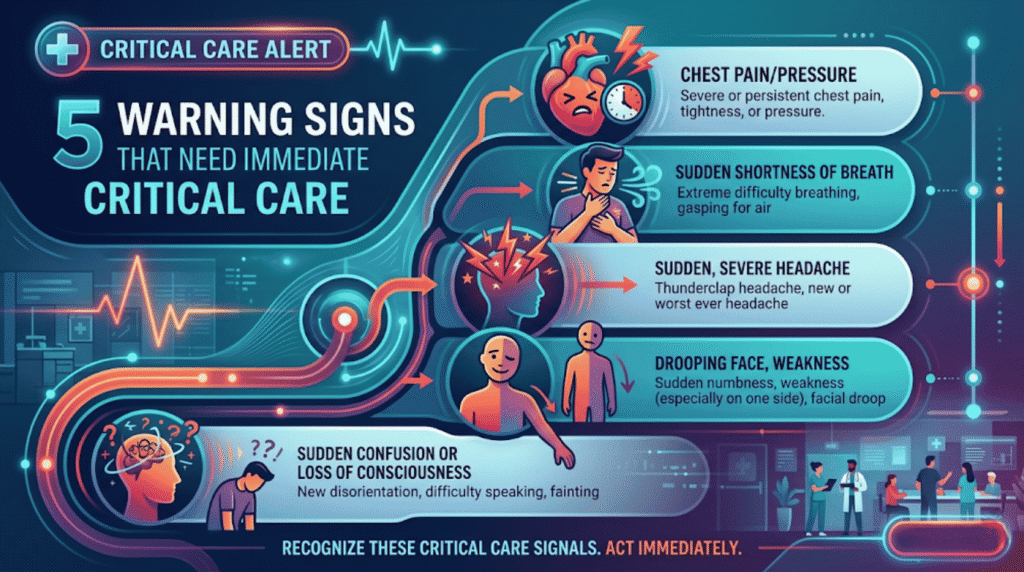
5 Warning Signs That Need Immediate Critical Care Sometimes a person looks fine, and suddenly their condition becomes serious. In such moments, waiting or ignoring symptoms can be dangerous. Critical care is needed when the body is not stable and needs close medical attention. Knowing a few warning signs can help you act quickly and get the right help at the right time. If you are searching for a critical care hospital, it is important to understand when a situation becomes an emergency. Trouble in Breathing If someone is struggling to breathe, taking very fast breaths, or feeling tightness in the chest, it is a serious sign. This can happen due to lung infection, asthma, or heart problems. When the body does not get enough oxygen, it can affect the brain and other organs. In such cases, quick treatment is very important. Sudden Chest Pain Chest pain should never be ignored. If the pain is severe or spreading to the arm, neck, or jaw, it may be linked to the heart. Some people think it is just gas or acidity and delay treatment. But it is always safer to get it checked early to avoid serious problems. Confusion or Fainting If a person suddenly becomes confused, very sleepy, or faints, it is a warning sign. This can happen in conditions like stroke, head injury, or serious infection. It means the brain may not be getting enough oxygen or blood. Immediate medical care is needed. Heavy Bleeding or Injury If there is heavy bleeding after an accident and it does not stop, it needs urgent care. Serious injuries can lead to shock and weakness. Quick treatment helps control bleeding and supports the body. High Fever with Weakness Fever is common, but a very high fever with weakness, vomiting, or confusion can be serious. Infections like dengue, malaria, or viral infections can get worse quickly. Sometimes they affect many parts of the body and need close care. Why Acting Fast Matters In all these situations, time is very important. Even a small delay can make the condition worse. In critical care units, patients are watched closely. Doctors keep checking oxygen, pulse, and blood pressure. They take quick steps based on the condition. This helps in better recovery. Conclusion Serious health problems often give warning signs. Breathing trouble, chest pain, confusion, heavy bleeding, and high fever should not be ignored. Getting medical help on time can save a life. With proper care and support from experienced doctors like Dr. Kush Jariwala and Dr. Pooja Adiwala, patients can get the right treatment and feel safe during critical situations.
Uncategorized

Neurology Care: Symptoms, Treatments & When You Need to See a Neurologist

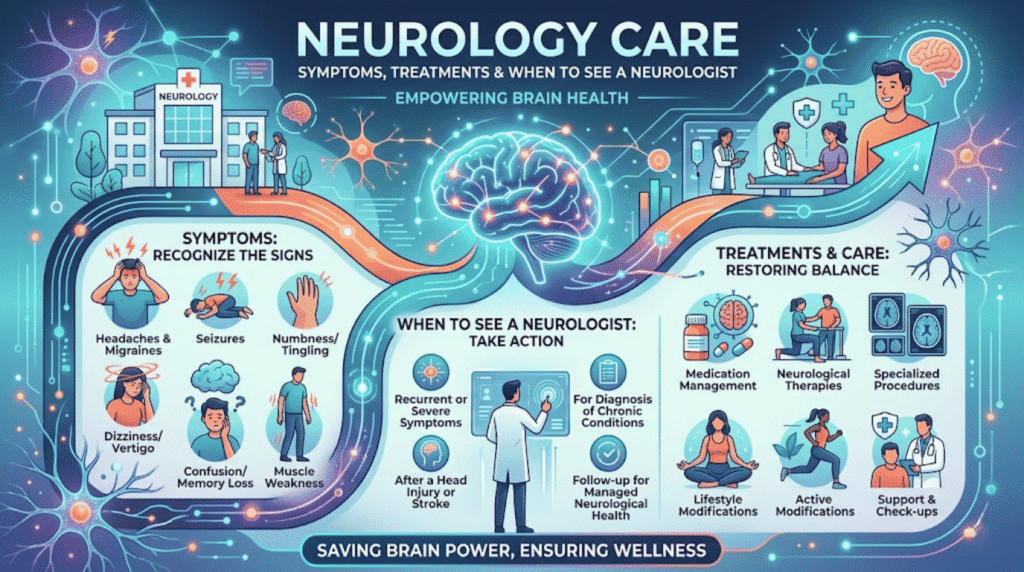
Neurology Care: Symptoms, Treatments & When You Need to See a Neurologist Our brain and nerves control everything we do—walking, talking, thinking, and even breathing. So, when there is a problem in this system, it can affect daily life in many ways. Some issues start slowly, while others happen suddenly. That’s why it’s important to notice early signs and take them seriously. If you are looking for the best neurology treatment in Ahmedabad, understanding the symptoms and getting timely care can really help. Common Symptoms You Should Notice Neurological problems often begin with small changes in the body. Some common signs are: ● Weakness in the face, arm, or leg● Trouble speaking or understanding● Severe or unusual headache● Numbness or tingling● Feeling dizzy or losing balance● Memory problems or confusion● Seizures (fits)● Vision issues These symptoms may seem minor at first, but they should not be ignored, especially if they happen suddenly. When Should You See a Doctor? You should see a doctor if these symptoms keep coming back or start affecting your daily routine. Go to the hospital immediately if you notice: ● Sudden weakness on one side of the body● Slurred or unclear speech● Sudden unconsciousness● Repeated seizures● Serious head injury In such cases, quick treatment can prevent serious damage. Common Neurology Problems Doctors treat many types of brain and nerve problems, such as: ● Stroke or brain attack● Paralysis● Brain infections● Nerve weakness or pain● Spine problems● Conditions like Guillain-Barré Syndrome (GBS) Some of these problems can become serious and may need close care in the hospital. How Treatment Is Done Neurology treatment usually starts with a simple check-up. The doctor will ask about your symptoms and examine you. Tests like CT scan, MRI, or blood tests may be done to understand the problem better. After that, treatment may include: ● Medicines to control symptoms● Emergency care for stroke● Treatment for infections● Physiotherapy for recovery● ICU care if the condition is serious Every patient is different, so treatment is planned based on the condition. What Is Neuro Critical Care? Sometimes, patients need extra care and close monitoring. This is called neuro critical care. It is needed in serious conditions like stroke, brain injury, or severe infection. Doctors and nurses monitor the patient all the time and take quick action if needed. Conclusion Brain and nerve problems should never be ignored. Even small symptoms can become serious if left untreated. Early diagnosis and timely treatment can help in better recovery. If you notice any unusual symptoms, it is always better to get checked early. With proper care and guidance from experienced doctors like Dr. Kush Jariwala and Dr. Pooja Adiwala, patients can feel more safe and supported during treatment.

Uncategorized

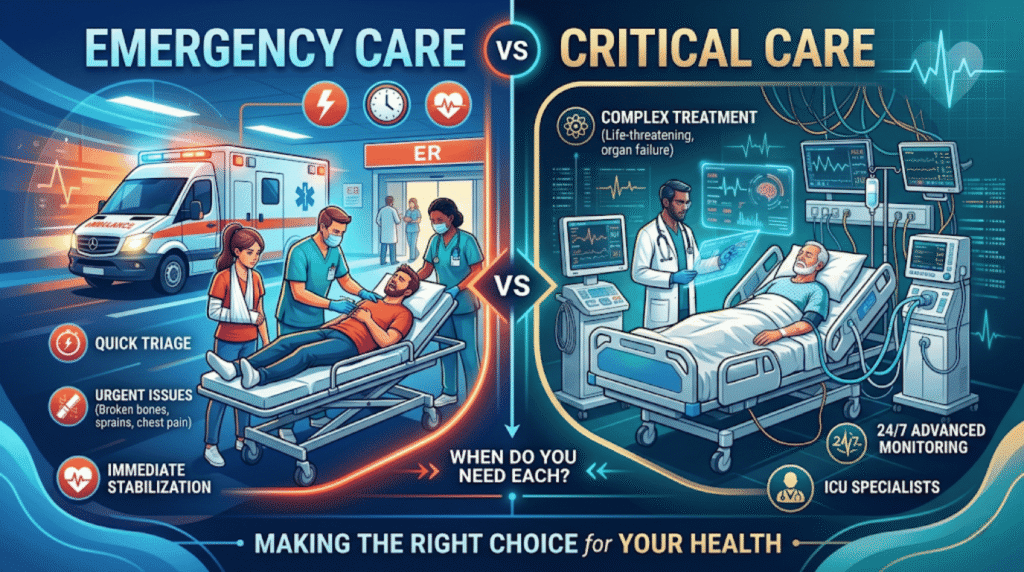
Emergency Care vs Critical Care: When Do You Need Each?

Emergency Care vs Critical Care: When Do You Need Each? When a sudden health problem happens, it can be scary and confusing. Many people hear the terms emergency care and critical care and think they are the same. But they are different. Understanding this difference can help you take the right step at the right time. What Is Emergency Care? Emergency care is the first medical help you receive when something serious happens suddenly. The main goal is to treat the problem quickly and make the patient stable. You may need emergency care in situations like: ● Sudden chest pain● Trouble breathing● Accidents or injuries● Heavy bleeding● High fever with confusion● Signs of stroke, such as weakness or difficulty speaking In the emergency room, doctors and nurses work fast. They check the patient, give immediate treatment, and control the situation. Some patients feel better after treatment and can go home. Others may need more care and are admitted to the hospital. What Is Critical Care? Critical care is for patients who are very serious and need constant medical attention. This care is given in the ICU (Intensive Care Unit). A person may need critical care if: ● They are unconscious or not responding● Their heart, lungs, or kidneys are not working properly● They have a severe infection● They need close care after major surgery● They have life-threatening injuries In critical care, patients are monitored all the time. Special machines help doctors track vital signs like heart rate and breathing. Some patients may need support like a ventilator to help them breathe. A team of trained doctors and nurses takes care of them day and night. What Is the Main Difference? The difference is simple and important. Emergency care focuses on quick treatment and making the patient stable.Critical care focuses on continuous care for serious and life-threatening conditions. Emergency care is usually the first step. If the condition is more serious, the patient is shifted to critical care for further treatment. When Should You Go for Emergency Care? If you notice sudden or serious symptoms, do not wait. Go to the emergency department immediately. Quick action can prevent the condition from getting worse and can even save a life. Critical care is not something you decide on your own. Doctors decide this after checking the patient’s condition. If they feel that the patient needs constant monitoring or life support, they move them to the ICU. Why Is It Important to Understand This? In medical emergencies, every minute matters. Knowing the difference between emergency care and critical care helps you act faster and avoid confusion. It also helps family members stay calm and understand what is happening. Choosing a hospital that offers both services is helpful. It allows smooth care without delay if a patient needs to move from emergency treatment to critical care. Conclusion Emergency care and critical care are both important parts of healthcare. One provides quick help during sudden problems, while the other supports patients who need close and continuous care. Knowing when each is needed can make a big difference in serious situations. If you are searching for the Best Emergency & Critical Care Hospital in Ahmedabad, it is important to choose a place with experienced doctors like Dr. Kush Jariwala and Dr. Pooja Adiwala, who can provide the right care at the right time.

Uncategorized

Why Early Infection Treatment Can Save Life

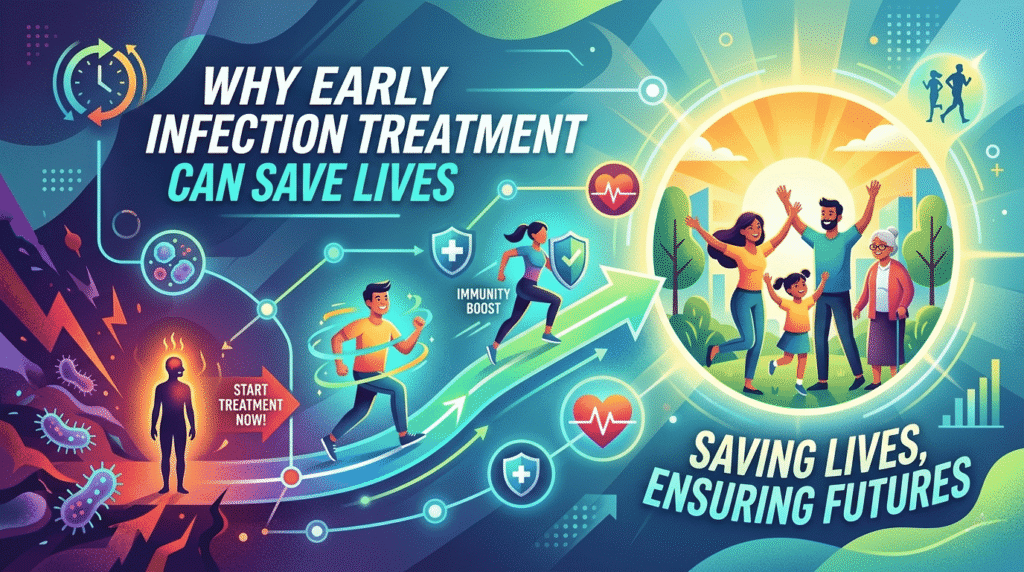
Why Early Infection Treatment Can Save Life Infections are common, but their seriousness is often underestimated. Many start with simple symptoms like fever or weakness, but some can progress quickly and affect major organs. In critical care practice, delayed treatment is one of the main reasons patients develop complications. This is why early medical attention is so important, especially when managing serious conditions like dengue, malaria, or swine flu. At hospitals providing the best infection treatment in Ahmedabad, doctors focus on early detection, accurate diagnosis, and timely treatment to prevent infections from becoming life-threatening. Infections That Can Become Serious Not all infections are mild. Some conditions need close monitoring and hospital care, such as: Severe infections affecting the whole body Dengue with low platelets or bleeding risk Chikungunya with high fever and severe joint pain Malaria with complications like anemia or organ stress Swine Flu (H1N1) affects the lungs and breathing Multi-Organ Dysfunction Syndrome (MODS), where multiple organs start failing These conditions can worsen quickly, especially in children, elderly patients, or people with weak immunity. Early Symptoms That Should Not Be Ignored Many serious infections begin with common signs. The problem starts when these signs are ignored. Watch for: Persistent high fever Severe weakness or fatigue Breathing difficulty Vomiting or poor fluid intake Confusion or unusual drowsiness Rash or bleeding (commonly seen in dengue) These symptoms need medical evaluation without delay. Why Early Treatment Matters From a clinical point of view, early treatment helps in controlling infection before it spreads in the body. Evidence from critical care practice shows that timely intervention can: Stop the infection from spreading  Reduce the risk of organ damage  Lower the chances of ICU admission  Improve recovery outcomes On the other hand, delayed treatment can lead to complications like sepsis or MODS, where multiple organs fail, and intensive care becomes necessary. How Infection Treatment Is Managed in Critical Care In a critical care hospital, infection management follows a structured medical approach: 1. Clinical evaluationDoctors assess symptoms, medical history, and overall condition to understand severity. 2. Diagnostic testingBlood tests, infection markers, cultures, and imaging help identify the exact cause and type of infection. 3. Early treatment initiationBased on diagnosis, antibiotics, antivirals, fluids, or supportive medicines are started promptly. 4. Continuous monitoringVital signs such as oxygen levels, blood pressure, and organ function are monitored closely. 5. ICU support when requiredIn severe cases like H1N1, dengue complications, or MODS, ICU care is provided for organ support and constant observation. This structured approach is standard in critical care medicine and helps improve patient safety and outcomes. Importance of Timely Medical Attention Clinical experience shows that infections can change rapidly within hours. Early consultation allows doctors to identify risk early and start treatment before complications develop. This is especially important in conditions like dengue and malaria, where sudden deterioration is common. Conclusion Serious infections should never be ignored or delayed. Early recognition and timely treatment play a major role in preventing complications and saving lives. With structured care, proper diagnosis, and ICU support when needed, patients have a better chance of recovery. Experienced specialists like Dr. Kush Jariwala and Dr. Pooja Adiwala focus on timely evaluation and evidence-based treatment, which is essential in managing critical infections safely and effectively.

Scroll to Top